

When AI Cooks Up Fake Case Law: Clinco v. Commissioner

Want to listen to this instead of reading it? Check out the narrated version.
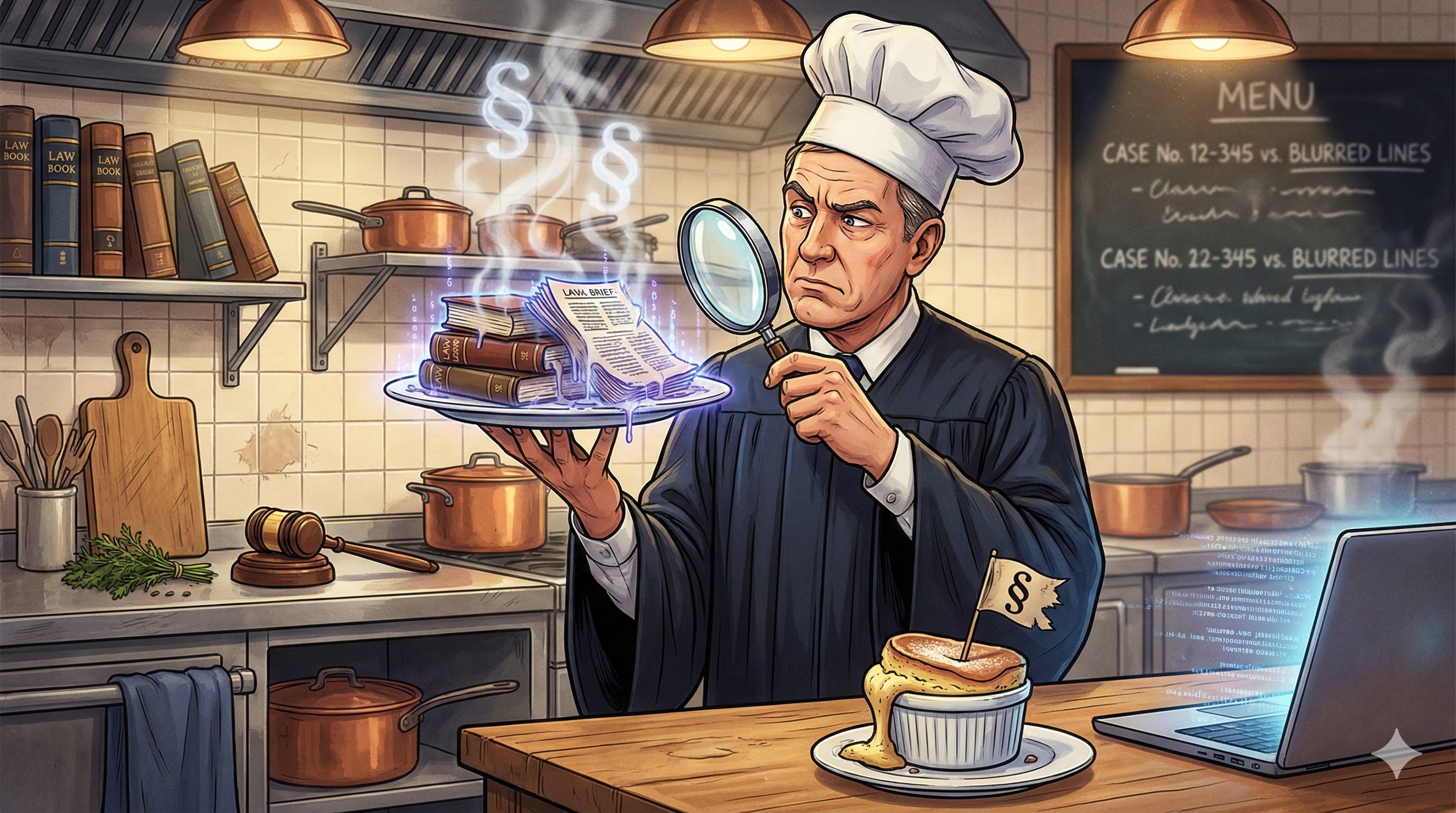
If you read cases from the Tax Court, you already know Judge Mark V. Holmes. He’s been on the bench since 2003, he clerked for the legendary Judge Kozinski, and he’s written some of the most memorable opinions in the court’s recent history, from the Michael Jackson estate valuation to micro-captive insurance in Avrahami. He writes opinions like a storyteller, not a bureaucrat, and that alone makes his work worth reading.
His latest, Clinco v. Commissioner, T.C. Memo. 2026-16, is vintage Holmes. It involves an attorney who ran a restaurant, self-prepared his own returns, underreported over $2.2 million in gross receipts, cited DOGE to challenge the IRS’s analysis, and, through his counsel, submitted a brief so riddled with fabricated case citations that Holmes compared it to something “cooked up by AI.”
The food metaphors are intentional. The taxpayer ran a restaurant. And Holmes clearly had fun with them.
The Facts
Peter Clinco was a Los Angeles attorney whose practice focused on real-estate leasing and representing small businesses. He was also an entrepreneur who spent 25–30 hours a week running MedCafe Westwood, LLC, a restaurant and bar near UCLA with approximately 60 employees. It was a family operation: Clinco’s brother Michael held a 33.4% ownership stake through 2014, and a third brother, David, served as manager and bookkeeper. In 2015, Clinco converted MedCafe into a single-member LLC.
MedCafe didn’t record tips — employees received them directly at the end of each shift, including cash from customers, and were responsible for their own tip reporting. Clinco estimated that 90% of MedCafe’s income came from credit card payments and 10% from cash.
Here’s where it gets interesting: Clinco prepared his own 2015 Forms 1065 and 1040. The joint return with his wife wasn’t filed until September 2018 — over two years late. On his Schedule C for MedCafe, he reported gross receipts exceeding $1.6 million but claimed expenses, producing a net loss of approximately $400,000.
He also claimed $56,798 in depreciation deductions on Schedule E for two rental properties in Pasadena that he said were placed in service in May 2015. No purchase invoices. No closing statements. No records establishing depreciable basis or placed-in-service dates.
The Audit
Revenue Agent Yi Liu began the examination in 2019. Clinco was already seriously ill, and much of the communication ran through his accountant. When the RA discovered a discrepancy between reported gross receipts and audited credit-card-sales-to-cash ratios, she summoned bank records and conducted a bank deposits analysis across eight accounts at Chase and City National Bank.
She also pulled third-party Information Return Processing (IRP) data, Forms 1099-MISC and 1099-K, from UCLA, First Data Reporting, American Express, and Grubhub. Using those records, plus Clinco’s own admission that roughly 10% of revenue was cash, the RA reconstructed MedCafe’s gross receipts at approximately $2.29 million, well above what was reported on the return.
After an $82,000 concession for substantiated capital contributions, the Commissioner asserted that Clinco had underreported gross revenue by about $2.2 million.
Within months of receiving the notice of deficiency, Clinco passed away. His wife, C.M. Barone-Clinco, continued the case as successor in interest.
The Procedural Challenge: “Where’s the Wet Signature?”
Before getting to the merits, Clinco’s attorney, Abraham Wagner, challenged the validity of the Notice of Deficiency because it lacked a “wet” signature from an IRS employee. The notice bore the name of David H. Okuda, the technical services territory manager, followed by initials indicating a delegated signing official. Wagner argued that “critical requirements like a signature must be followed for a Notice of Deficiency to be valid.”
Holmes wasn’t convinced. He pointed to IRM provisions that provide multiple acceptable methods for signing notices, including delegation, typed names, and electronic images. But he went further: the caselaw doesn’t even require a signature at all. Citing Tavano v. Commissioner, 986 F.2d 1389 (11th Cir. 1993) and Urban v. Commissioner, 964 F.2d 888 (9th Cir. 1992), Holmes noted this question “has been settled since before World War II,” pointing all the way back to Commissioner v. Oswego Falls Corp., 71 F.2d 673 (2d Cir. 1934).
The AI Problem
Then Holmes turned to the citations in Wagner’s brief, and the opinion shifted from routine to remarkable.
Wagner cited four cases to support his signature argument. Three of them don’t exist.
Holmes, in his signature style, wrote that the argument’s persuasiveness “collapses like an overmixed soufflé when one looks at the citations used to prop it up.” He went case by case:
“Cacchillo v. Commissioner, 130 T.C. 132 (2008)” — doesn’t exist. Page 132 in volume 130 of the Tax Court Reports falls within Porter v. Commissioner, 130 T.C. 115 (2008), a case about §6015(f) relief — completely unrelated.
“Miller v. Commissioner, 57 T.C. 440 (1971)” — doesn’t exist as cited. Page 440 in volume 57 is within Winfield Manufacturing Co. v. Renegotiation Board, 57 T.C. 439 (1971), which doesn’t mention a notice of deficiency at all.
“Tefel v. Commissioner, 118 T.C. 324 (2002)” — no such case. Page 324 of volume 118 is a paragraph in Hillman v. Commissioner, 118 T.C. 323 (2002), a case about S corporation management fees.
Here’s what makes it worse: the Commissioner catalogued all of this in his answering brief. Wagner’s response? He “chose not to clarify their origins in his reply.” He even listed “Cacchillo” again in his table of authorities.
Holmes then delivered the line:
“The bouillabaisse of case names, reporter citations, and legal propositions suggests something cooked up by AI.”
He cited a string of federal cases condemning fabricated citations, quoted Chief Justice Roberts’s 2023 Year-End Report advice to lawyers who cite nonexistent cases “Always a bad idea” and noted that while the Tax Court doesn’t have a direct equivalent to Federal Rule of Civil Procedure 11(b), lawyers appearing before the court must follow Model Rule 3.3(a)(1), which bans knowingly making false statements of law.
Then came the footnote that every practitioner should read. Holmes acknowledged it wasn’t entirely clear from the record whether Wagner actually used generative AI. He allowed that “a bit of embarrassment for failure to citecheck, failure to ‘fess up, and (if it occurred) use of AI to write a section of the brief is enough for now.” But he added:
“Tax Court has not done so. Yet.“
That single-word sentence is a warning shot. And in a characteristically Holmes touch, he even acknowledged that judges aren’t immune: “And, one must confess, even judges have contributed to this stew,” citing a Bloomberg Law article about judicial AI blunders.
The Substantive Holdings
Beyond the AI fireworks, the opinion addresses issues that come up constantly in IRS representation work.
Unreported Income and the Bank Deposits Method
The IRS reconstructed Clinco’s income through bank deposit analysis and IRP data, standard tools when a taxpayer’s books don’t match reality. Clinco raised three arguments:
First, he claimed the Commissioner didn’t sufficiently identify the sources of unreported income. The court found the Forms 1099 were identified through IRP data, and the cash estimate came from Clinco’s own statements; there was nothing arbitrary about it.
Second, he argued that over $385,000 in deposits were personal capital contributions misclassified as income. The RA had already reviewed this and conceded $82,242.18 in verified contributions before trial. Clinco offered no evidence of additional contributions beyond an email, and the court held that “the existence of some substantiated deposits does not support a finding of other unsubstantiated deposits.”
Third, and this one is notable. Clinco cited the Department of Government Efficiency (DOGE), arguing that DOGE “has found errors in some IRS records” and that the Commissioner’s analysis was therefore “likely faulty.” Holmes dismissed this as “entirely speculative,” noting Clinco offered “no substantive evidence” for the claim.
Clinco also argued that MedCafe “never made a profit and had in fact been in bankruptcy.” The Court’s response: “Even money-losing businesses, however, can have unreported income.”
That’s a one-sentence lesson that some taxpayers and their representatives need to hear. A business can lose money and still have unreported gross receipts. Those are not mutually exclusive concepts.
Depreciation Without Substantiation
Clinco claimed $56,798 in depreciation for two Pasadena properties — an apartment building (claimed basis of $1.8 million) and a single-family home (claimed basis of $700,000). He filed Forms 4562 reporting both as placed in service in May 2015. But he provided no purchase invoices, no closing statements, no records establishing basis or placed-in-service dates.
His argument? He claimed the same depreciation on his 2017 return, and the IRS never questioned it.
Holmes cited §§167(a) and 6001, along with Cluck v. Commissioner, 105 T.C. 324 (1995): taxpayers must prove depreciable basis, cost, and useful life with adequate records. His conclusion: “Whether Clinco claimed the depreciation in a later tax year is no proof he was entitled to the depreciation for 2015.”
Each tax year stands on its own. The IRS not challenging something previously does not establish entitlement. This comes up constantly in representation work, and it’s always worth reminding clients.
What This Means for Practitioners
There are two big takeaways from Clinco, and they happen to sit at the intersection of IRS representation and technology.
On the representation side: This case is a textbook example of why records matter. Bank deposit analysis, 1099-K matching, cash percentage estimates — the IRS has tools to reconstruct income when taxpayers can’t substantiate what they reported. If you’re representing a client with a Schedule C business and the books are thin, get ahead of it. Pull transcripts. Review the IRP data before the IRS does. And make sure your client understands that “the business lost money” is not a defense against unreported gross receipts.
On depreciation, the lesson is equally fundamental: document everything. Basis, placed-in-service dates, useful life calculations. If you can’t prove it, you can’t deduct it.
And the DOGE argument? It’s tempting to think recent headlines give you ammunition in Tax Court. They don’t, at least not without substantive evidence tied to the specific case. Speculation doesn’t carry the day.
On the technology side: We’ve seen federal courts sanction attorneys for AI-generated citations since Mata v. Avianca in 2023. But Clinco is, as far as I’m aware, the first time a Tax Court judge has explicitly called out likely AI hallucinations in a brief filed in that court. And Holmes made sure we know this isn’t the end of the conversation, “Tax Court has not done so. Yet.”
If you’re using AI tools in your practice, you should be; they’re powerful, and you have to verify every single output. Every case citation. Every code section reference. Every regulatory cite. AI is a research assistant, not a research replacement. The moment you file something you didn’t independently verify, you own it. And if it turns out to be fabricated, you’re the one standing in front of a judge explaining why you cited a case that doesn’t exist.
What makes Wagner’s situation worse is that he had a second chance. The Commissioner identified the fake citations in his answering brief. Wagner could have addressed it, corrected the record, taken responsibility. Instead, he said nothing and cited “Cacchillo” again. That’s the kind of thing judges remember.
This isn’t theoretical anymore. It’s happening in Tax Court.
Clinco v. Commissioner, T.C. Memo. 2026-16 (Judge Holmes). Decision to be entered under Rule 155.
